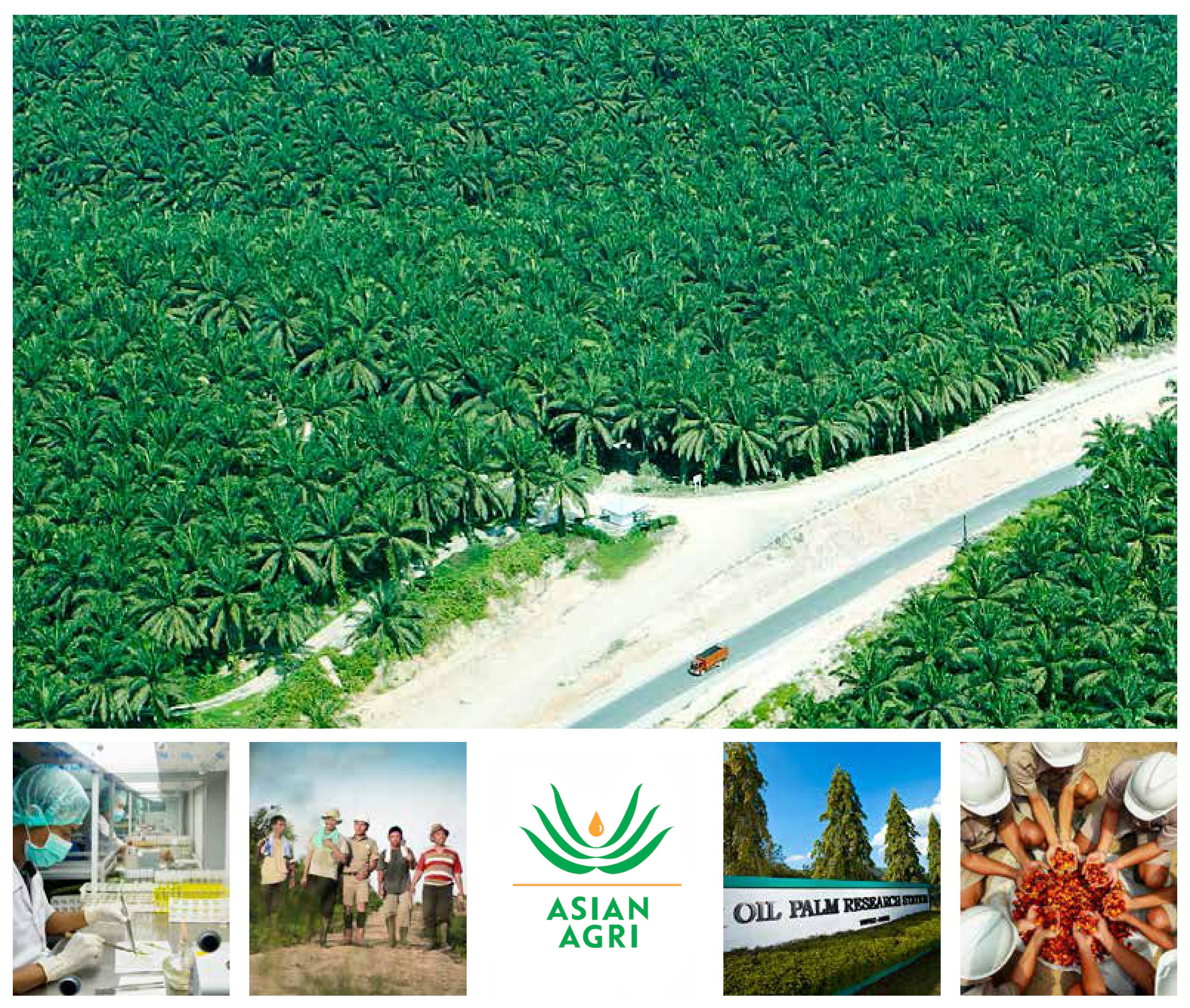

Integrated Pest Management (IPM) is an approach to pest control that focuses on prevention, regular monitoring, and biological methods to protect plantations while reducing usage of pesticides and other chemicals.
In oil palm plantations, pests can affect crop health and productivity if not identified and managed early. By enabling plantations to respond in a more targeted and timely way, IPM supports effective pest control while helping maintain ecological balance in the field.
At Asian Agri, IPM shapes how pest risks are managed across our plantations. Pest pressure can change with weather patterns, crop cycles, and surrounding conditions, so field teams monitor regularly to spot early signs of risk. This allows preventive and biological measures to be applied first, before issues spread further.
Biological and Ecological Controls in Practice
At Asian Agri, pest control starts with prevention. Before considering any chemical solution, we prioritise biological and ecological methods that help keep pest levels under control naturally. This preventive approach not only supports more responsible pest management, but also helps reduce reliance on chemical pesticides by ensuring they are used only when necessary.
Given the range of pests that can affect oil palm plantations, from rodents to insects such as bagworms, nettle caterpillars, and rhinoceros beetles, early intervention is essential to protect crop health and yield. By relying first on natural systems within the plantation, Asian Agri can address pest pressure in a more sustainable and measured way.
Barn Owls for Rodent Control
Rats are among the most persistent pests in oil palm plantations, feeding on fresh fruit bunches and damaging developing fruits. If not managed properly, their presence can gradually affect productivity.
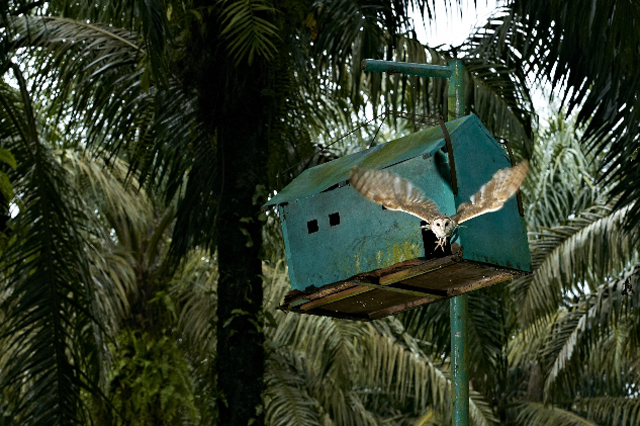
At Asian Agri, barn owls (Tyto alba) form a key part of this strategy. Alongside installing nesting boxes across plantations, dedicated breeding and rearing programs are in place to support a stable owl population. Nest boxes are carefully positioned and maintained, while surrounding habitats are managed to encourage long-term occupancy. As nocturnal predators, barn owls naturally help suppress rodent populations in the field.
This combination of breeding, habitat management, and ongoing monitoring ensures the system remains effective over time. By strengthening natural predation within the plantation ecosystem, rodent populations can be controlled at scale while reducing reliance on chemical methods.
Nectar-Bearing Plants to Sustain Beneficial Insects
Bagworms and nettle caterpillars are among the most common foliage pests in oil palm plantations. They feed on leaves and, if left unchecked, can reduce photosynthesis and affect overall crop performance. Managing these pests early is therefore important to maintain healthy palms.
At Asian Agri, this is addressed by strengthening natural pest control in the field. We plant nectar-bearing plants across our plantations to attract insects which are natural predators of common pests.
White alder (Turnera subulata) and Cassia cobanensis are planted across our plantation areas to provide a steady nectar source that sustains these natural predators. These plants attract beneficial insects such as:
- Assassin bugs (Sycanus), which feed on leaf-eating caterpillars
- Predatory stink bugs (Eocanthecona furcellata), natural enemies of bagworms and nettle caterpillars
- Parasitic wasps, which target pest larvae and help interrupt the caterpillar life cycle before populations expand
Utilizing Natural Pathogens
Biological agents are also used as part of pest control. Certain naturally occurring fungi and microbes are applied to target specific pests while limiting impact on other organisms.
One example is the use of Metarhizium anisopliae, a fungus that infects and controls rhinoceros beetle larvae. When applied in breeding sites, it helps suppress beetle populations and reduce potential crop damage.
These biological controls are used in combination with monitoring and other preventive measures. The aim is to manage pest pressure effectively while reducing reliance on chemical pesticides and maintaining ecological balance within the plantation system.
Traps for Monitoring and Direct Control
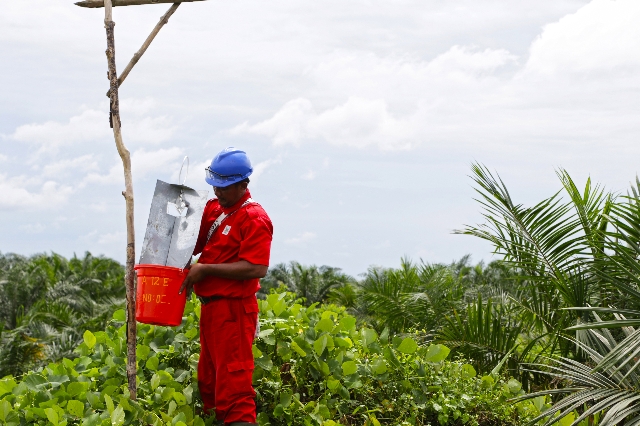
Traps are another targeted tool used to manage specific pest populations. Pheromone traps are primarily used to attract and capture adult rhinoceros beetles, while light traps combined with attractants help manage moths and other flying insects. By removing breeding adults, these methods help reduce pest populations in the next cycle.
Monitoring data from these traps allows teams to identify breeding hotspots. Once identified, these areas can be cleared or treated to prevent further development. By addressing both adult insects and their breeding sites, pest levels can be managed more effectively.
Policy, Standards, and Oversight
Integrated Pest Management (IPM) at Asian Agri follows internal standards and is well-structured and implemented consistently across our operations. The approach is aligned with RSPO and ISPO requirements for responsible pest management.
Our approach is detailed in the Agronomy Policy Manual (APM) and supported with Standard Operating Procedures (SOPs) used by our plantation teams. These outline:
- How and when pest monitoring is conducted
- The pest population levels that require action
- The control methods that may be used
- The records that must be maintained
Teams apply these procedures across our operations. Monitoring results and follow-up actions are documented, and pesticide use is recorded and reviewed as part of routine management oversight.
This approach reflects our wider environmental commitments, as set out in our Sustainability Policy.
Monitoring, Thresholds, and Targeted Intervention
Monitoring is a routine part of plantation work. Field teams regularly inspect blocks to track pest activity and document their observations. This helps identify changes early, before they affect crop performance.
Our response follows a clear structure.
Regular monitoring includes
- Field inspections and sampling
- Recording pest incidence and affected areas
- Tracking patterns over time
We use defined population thresholds to guide decisions. These thresholds indicate when pest levels may begin to impact yields.
If pest levels remain below the threshold
- Monitoring continues
- Preventive and biological methods are maintained
If pest levels exceed the threshold
- Action is taken in the affected area
- Interventions are targeted rather than applied broadly
- Chemical pesticides may be used selectively and under strict control when other measures are not sufficient
This approach keeps decisions measured and disciplined. It helps avoid unnecessary intervention while protecting crop performance. Actions are based on field observations and established guidelines.
Continuous Improvement and Transparency
Integrated Pest Management is reviewed throughout the year to ensure it remains effective in the field. Progress is tracked through regular monitoring and reporting, allowing teams to adjust approaches based on field conditions.
As reported in our Sustainability Report, overall pesticide use declined by 31% in 2024 compared with our 2022 baseline. This reflects the increased use of biological controls and more targeted application, rather than broad-based spraying.
We also disclose the concentration of active ingredients relative to total volume applied. This provides clearer comparison per hectare and greater visibility into toxicity classifications based on World Health Organization guidelines.
In selected areas, we have introduced drone-assisted spraying following internal validation trials. This allows for more precise application in targeted areas, improves consistency, and reduces direct exposure for field workers.
Research and development teams continue to work with plantation teams to strengthen biological controls and further reduce reliance on chemical pesticides. Consistent oversight, transparent reporting, and ongoing field improvements keep our IPM approach disciplined and data-driven.
Frequently Asked Questions (FAQs)
- What is Integrated Pest Management at Asian Agri?
Asian Agri’s Integrated Pest Management (IPM) is a structured and science-based approach to controlling pests in oil palm plantations. It prioritizes prevention, biological controls, and regular monitoring before considering chemical intervention. Chemical pesticides are used selectively and only when pest populations exceed defined thresholds.
- How does Asian Agri reduce the use of chemical pesticides?
Asian Agri reduces chemical pesticide use by relying on biological controls such as barn owls, beneficial insects, natural pathogens, and targeted trapping systems. Regular field monitoring ensures that intervention is only taken when necessary
- When does Asian Agri use chemical pesticides?
Asian Agri uses chemical pesticides only when pest populations exceed established economic thresholds. Monitoring data guides decisions, and applications are targeted to affected areas rather than applied broadly. All pesticide use follows internal standards aligned with RSPO and ISPO requirements.
- How does Asian Agri monitor pest populations in its plantations?
Asian Agri monitors pest populations through routine field inspections, sampling, and the use of traps such as pheromone and light traps. Field teams record pest incidence, affected areas, and population trends over time. This monitoring data is used to determine whether pest levels remain below defined thresholds or require targeted intervention.
- How does Asian Agri ensure transparency in pesticide use?
Asian Agri discloses pesticide data in its Sustainability Report, including overall usage trends and the concentration of active ingredients relative to total volume applied. Substances are categorized according to World Health Organization toxicity classifications. This reporting improves comparability per hectare and strengthens transparency in pest management practices.