
Asian Agri places sustainability as the main foundation of its operations. However, the company recognizes that commitments alone are not enough. Real action is essential to create meaningful and lasting impact.
To turn this commitment into action, Asian Agri launched its long-term sustainability vision, Asian Agri 2030, in 2022. This vision aims to create positive value for smallholders, communities, and the environment through responsible business practices.
Asian Agri 2030 serves as the Company’s long-term business strategy. It is designed to ensure that business growth goes hand in hand with improving the quality of life of surrounding communities. Under this framework, operations are guided by clear and measurable targets, with a strong focus on impact and long-term sustainability.
This approach is rooted in Asian Agri’s 5C philosophy. The company believes that every activity should deliver benefits for the Community, Country, Climate, and Customers. When these four elements are fulfilled, then value can be created for the Company. This principal guides program planning and decision-making across all business lines.
As an implementation framework, Asian Agri 2030 is built on four main pillars:
- Smallholder Partnerships – working closely with smallholders to support better livelihoods.
- Inclusive Growth – encouraging broad participation to improve quality of life, including access to education and better livelihood opportunities.
- Positive Climate – promoting sustainable palm oil through best management practices.
- Responsible and Sustainable Production – integrated efforts to develop sustainable products.
Among these pillars, Inclusive Growth is a key focus in Asian Agri’s engagement with communities. Through programs implemented directly on the ground, the Company helps meet daily needs while building a foundation for the future.
This support is delivered through various initiatives, from children’s education programmes such as Bag-to-School to the development of Micro, Small, and Medium Enterprises (MSMEs). These initiatives aim to strengthen community independence and long-term resilience.
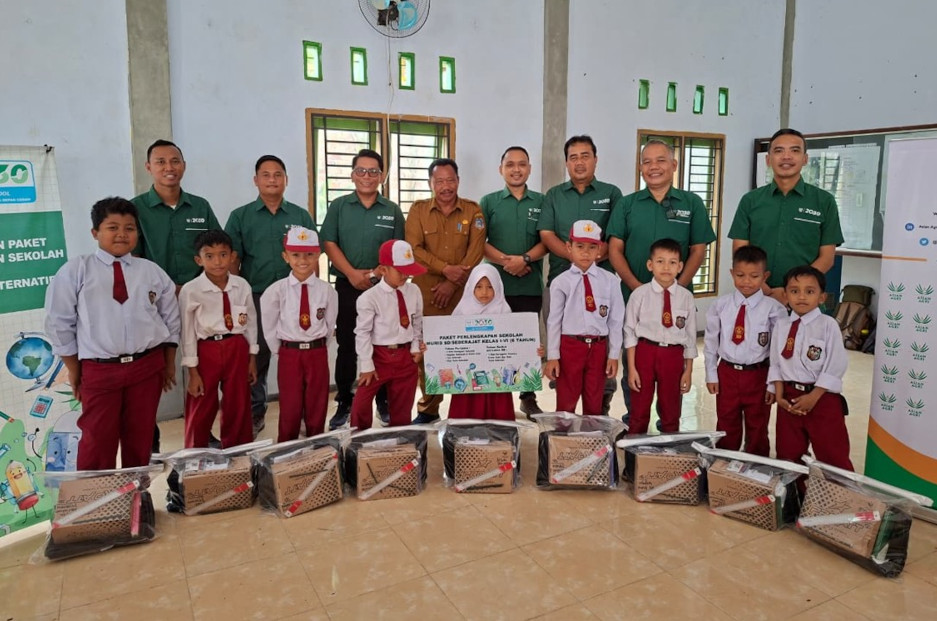
Asian Agri’s Bag-to-School Program provides students with complete education packages
Bag-to-School: Supporting Children’s Education
The Bag-to-School Program is one of Asian Agri’s key initiatives under the Inclusive Growth pillar. The program supports children from underprivileged families in continuing their education.
The program provides students from elementary to senior high school with complete education packages, including school bags, stationery, uniforms, and shoes. As a multi-year initiative, Bag-to-School supplies these essentials at the start of each academic year, helping students continue their learning while easing the financial burden on families.
In 2025, Asian Agri supported 795 students across North Sumatra, Riau, and Jambi, covering elementary, junior high, and senior high school levels. Through this program, Asian Agri contributes to building a stronger educational foundation for communities around its operations, while recognizing that education support is part of a broader, shared effort to improve long-term community wellbeing.
The program’s impact can be seen at SD Negeri 012 Lalang Kabung in Pelalawan, Riau. On the first day of school, most first graders arrived wearing new uniforms and carrying new school bags. For six students from underprivileged families, however, their school supplies and clothing were limited.
According to the school’s principal, Aprilyanti, the six students came from families facing economic challenges. While the school did not require new uniforms or supplies, differences were visible at the start of the academic year.
Through the Bag-to-School Program, the students received complete education kits, including new uniforms, shoes, school bags, and stationery. This support helped ensure they could attend school with the same level of readiness as their peers and focus on learning from the beginning of the school year.
The support does not stop after the first year. Each academic year, the students continue to receive supplies, providing consistency and stability during their formative years.
“Today, the children are confident and engaged in class, and they are focused on their studies and their future,” said Aprilyanti, Principal of SD Negeri 012 Lalang Kabung. She added, “Ongoing support like this gives families certainty and helps children stay prepared as they move through each level of school.”
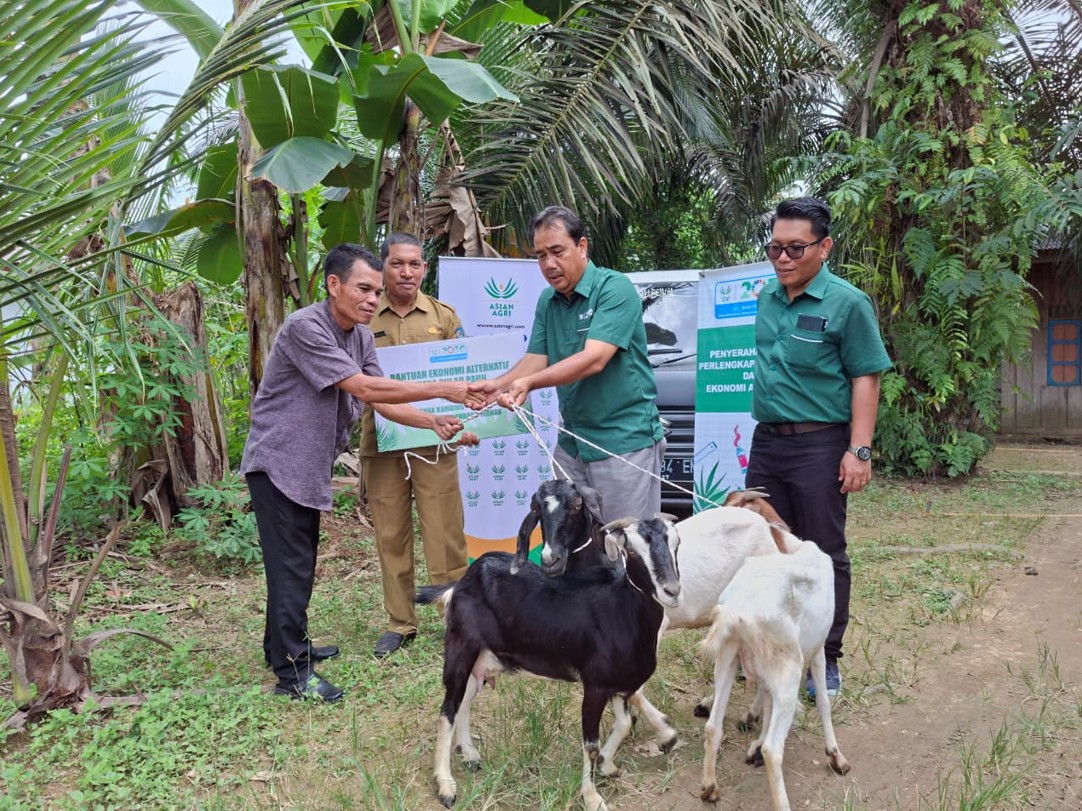
Asian Agri provides empowerment packages for MSMEs in North Sumatra, Riau, and Jambi
Beyond the Classrooms: Strengthening Livelihoods
As part of Inclusive Growth, Asian Agri focuses not only on education but also on strengthening local economies and household livelihoods. Building on earlier community development efforts, the company runs MSME development programs to support income diversification and improve community resilience.
In 2025, we provided 18 MSME empowerment packages across North Sumatra, Riau, and Jambi. In North Sumatra, seven villages received support for activities such as floating horticulture, freshwater fish farming, toman fish cages, and goat farming. In Riau, five villages were supported through a wider range of activities, including pineapple processing, traditional food production, sewing groups, red ginger products, fish farming, and maggot cultivation.
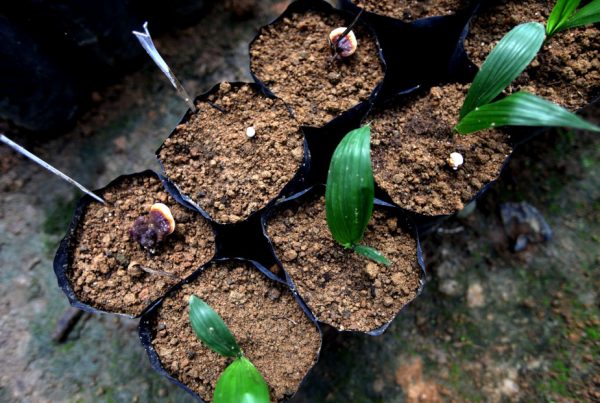
A similar approach was applied in Jambi, where six villages benefited from the program. Two villages joined the Desa Sawit Mandiri program, receiving oil palm seedlings and ongoing technical support, while also using school land as a learning space for plantation-based education. The remaining four villages received livestock assistance to help strengthen household incomes and support local economic resilience.
Beyond numbers and locations, the programs support individuals and families around our operational areas. One example is Supratno, a smallholder from Bagan Limo Village, Pelalawan, Riau, and a member of the Sido Mulyo Fish Farming Group.
After years of working on oil palm plantation, he looked to diversify into fish cultivation but faced limited capital and early setbacks. In 2022, we began supporting Supratno and his group with fish seedlings, nets, filtration equipment, feed, and practical training.
“The support we received was quite comprehensive. We were given fish seedlings, filtration equipment, nets, and feed. We also received training on how to produce our own feed, such as fish nuggets and azolla. In addition, we learned how to manage household waste and turn it into feed through maggot cultivation. The process to receive this support was very fast,” Supratno said.
Today, Supratno manages around 17,500 tilapia and 2,500 gourami, supported by continued technical guidance from Asian Agri, including during periods of drought and flooding.
“This support has helped improve my family’s income,” he added. “It also allows us to sell fish locally and share seedlings with other smallholders, so we can grow together.”
Taken together, these efforts show how Inclusive Growth is put into practice on the ground. Support for children’s education helps create a strong foundation, while livelihood programs help families develop alternative sources of income and build stability over time.
By responding to everyday needs and staying engaged as communities face change, Asian Agri continues to work alongside people in the areas around its operations, with a focus on learning, self-reliance, and steady progress into the future.